

University at Albany
Albany County

Ground Source Heat Pumps
Two ground source heat pump projects at the University at Albany—a residential building in 2012 and a multidisciplinary lab building in 2021—laid the groundwork for a comprehensive, net-zero energy master planning process that is allowing the University to choreograph a smart path to decarbonization with a combination of geothermal (ground source), heat recovery, and a gradual shift to low-temperature hot water.
Campus Characteristics
- Location: Albany, New York
- Founding year: 1844
- Total enrollment: 17,500
- Campus size: 500 acres
- Institution type: public
- Highest degree: doctoral
Key Metrics

- $30 million for decarbonization measures from a New York State legislative appropriation
- $2 million from NYSERDA (Building Cleaner Communities Competition) for a net-zero campus master plan

- Ground source heat pumps for residential and ground source heat recovery chiller for lab buildings
- Net-zero campus master plan
- Conversion to low-temperature hot water
- Centralized ground source heat recovery chillers for the all-electric
- Physical Education building

- 16% reduction in natural gas
- Up to 33% reduction in fossil fuel use if all measures are implemented
Institutional Goals
- Climate neutrality by 2044
Background
SUNY Albany, also known as the University at Albany or UAlbany, is a 500-acre campus located in New York’s state capital city. With more than 100 buildings across its campuses in Albany and Whiteface and more than 6.5 million square feet of space, the campus boasts 15 LEED-certified buildings, including two LEED Platinum buildings.
UAlbany began using geothermal as a decarbonization measure for two campus buildings. The first building, Liberty Terrace, is a student living facility built in 2012. This five-story, 500-bed residential hall is served by 150 boreholes that are each 450 feet deep.
The second building, ETEC  , is a 246,000-square-foot state-of-the-art building that opened in 2021 and houses researchers, educators, and entrepreneurs under the same roof. The $180 million building opened in 2021 and included a geothermal field of 190 boreholes and solar panels on the Uptown Campus Podium to save about 70% in energy costs, with efficient fixtures to reduce water usage by 40%, and green stormwater management including a porous parking lot and a teaching green roof. ETEC uses approximately 60% outside air and still maintains an energy use intensity of just 65 kBtu/square foot/year—well below the 103 kBtu/square foot/year target the SUNY Construction Fund Directives initially set. This is particularly impressive given that 40% of ETEC’s square footage is laboratory space.
The main Uptown campus is served by a central heating and cooling plant, which operates 365 days a year, relying on the skills and experience of more than 80 team members from the HVAC and central plant staff. This plant uses four gas-fired high-temperature hot water boilers that collectively pump out an average of up to 60 MMBtu per hour.
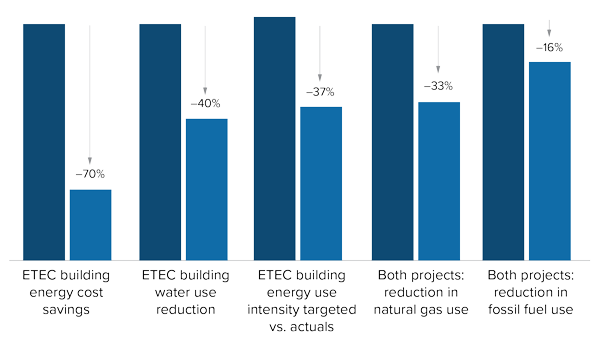
Figure 1 - Two University at Albany ground-source heat pumps projects by the numbers
- ETEC building energy cost savings -70%
- ETEC building water use reduction -40%
- ETEC building energy use intensity targeted vs. actuals -37%
- Both projects: reduction in natural gas use -33%
- Both projects: reduction in fossil fuel use -16%
Solutions Explored
As a public institution, University at Albany is subject to New York State climate mandates under the 2019 Climate Leadership and Community Protection Act (CLCPA) , followed by Executive Order 22 , which directed state agencies to develop a sustainability and decarbonization program. These mandates require all public institutions, including the University at Albany, to help meet the state’s goals of an 85% reduction in greenhouse gas emissions from 1990 levels by 2050.
In response, UAlbany pursued a competitive grant from NYSERDA for funds to develop a net-zero energy master plan for the Uptown Campus. Phase 1 of that study mostly focused on decarbonization pathways for three typical building types—academic, science, residential—and developing baseline data.
UAlbany then performed an exercise: what if time, money, and logistics were no object? What if anything were possible? Based on the best available technology today, how low could the EUI go, and how much would it cost?
From that exercise, UAlbany created an “ideal scenario,” where any building could be gut-renovated, disruptions were of no consequence, and cost was no obstacle. This analysis helped UAlbany realize that it was theoretically possible to achieve the CLCPA target of 85% decarbonization across the campus.
Solutions Implemented
In reality, campus buildings are rarely unoccupied, and funding is typically scarce. Through their net-zero campus master plan, UAlbany determined that 60–70% of decarbonization was achievable on campus at half the cost, layering in changes as opportunities for deferred maintenance and building renewal arise.
In 2023, the New York State Legislature approved a $30 million appropriation for campus decarbonization measures at UAlbany. This funding will go toward a project that will set in motion a gradual transition across campus from high-temperature to low-temperature hot water.
The project will replace two gas-fired absorption chillers in the University’s 1960s-era central power plant on the Uptown Campus with a high-efficiency electric centrifugal chiller and heat-recovery chillers.
Additionally, the University is modifying domestic hot water systems in more than 25 buildings and installing new low-temperature hot water piping in the campus’ athletic facilities. These upgrades will allow the campus to shut down its gas-fired boilers during the summer months and use the new geothermal heat recovery chiller to meet cooling needs, as well as meet 100% of heating and domestic hot water loads during the summer. The new heat recovery chiller will also provide 100% of the heating, cooling, and domestic hot water to the newly renovated all-electric Physical Education building.
One of UAlbany’s approaches is using the existing high-temperature hot water piping to distribute low temperature hot water from the new heat recovery chillers during the summer months and switching back to fossil-fuel-fired high-temperature hot water heating when the campus heating loads increase. This allows the University to leverage existing infrastructure and still integrate it within the decarbonized pathway.
While there is no near-term plan to eliminate fossil fuels from the central plant altogether, since reliability is still needed for peak loads and backup, this new strategy enables UAlbany to achieve 85% decarbonization. The current set of projects is expected to reduce fossil fuel consumption on the Uptown Campus by more than 30%.
Timeline
- 2010: Liberty Terrace, a 184,500-square foot, 500-bed student apartment building off campus, is built with ground source heat pumps.
- 2019: New York enacts the Climate Leadership and Community Protection Act
- 2022: New York Governor Kathy Hochul issues Executive Order 22
- 2021: UAlbany’s innovative lab building, ETEC, is constructed with geothermal heating and cooling and is the first all-electric net zero energy ready building on campus
- 2023: The New York State Legislature approves $30 million in funding for decarbonization measures at UAlbany
- 2025: UAlbany’s central plant is green-lit for upgrades to low-temperature hot water, which will enable the Physical Education building to become fully electrified using ground-source heat recovery chillers
Lessons Learned
- Design not for a building, but a whole system. UAlbany's energy master planning process has provided a significant amount of greater visibility into the entire building ecosystem on campus, forecasting when equipment will fail, new buildings are anticipated, and when major renovations are expected. Thinking down the road about how the central plant and buildings will evolve over time will enable better decision-making about overlaying decarbonization measures as opportunities arise.
- Don’t build more than you need. While it may be common practice to oversize heating equipment 30% above peak load for traditional systems, that would lead to high upfront costs for a ground-source heat pump system. To minimize those upfront costs, you can deploy creative load trading, heat recovery, and cooling systems during different seasons.
- Compression from heat pumps is an added heat source. At first, UAlbany thought residential buildings would be heating-dominant, but they soon discovered that heat pump systems include heat generation from compression. The University is trying to recover this heat for domestic hot water.
- Don’t let perfect get in the way of the good. Shooting for 100% decarbonization is a lofty goal, but it may not match the realities of operating a busy campus with high occupancy needs, limited budget, multiple priorities, and reliable backup power needs.
Financing
The University at Albany got the green light to move forward with a $30 million appropriation from the New York State legislature’s 2023–2024 budget. The Net Zero master plan effort totaling $2.7 million, received $2 million in funding from NYSERDA’s Building Cleaner Communities Competition.
Stakeholders Engaged
- Director of Energy
- Advocacy partners
- Design consultants
- Plumbers and Pipefitters Union
- New York State Legislature
- NYSERDA
- NYPA
- SUNY Construction Fund
For More Information
University at Albany
1400 Washington Avenue
Albany, NY 12222
Indu Lnu
Director of Energy
[email protected]
(518) 442-3400
Institutional Goals
- Climate neutrality by 2044
Background
SUNY Albany, also known as the University at Albany or UAlbany, is a 500-acre campus located in New York’s state capital city. With more than 100 buildings across its campuses in Albany and Whiteface and more than 6.5 million square feet of space, the campus boasts 15 LEED-certified buildings, including two LEED Platinum buildings.
UAlbany began using geothermal as a decarbonization measure for two campus buildings. The first building, Liberty Terrace, is a student living facility built in 2012. This five-story, 500-bed residential hall is served by 150 boreholes that are each 450 feet deep.
The second building, ETEC , is a 246,000-square-foot state-of-the-art building that opened in 2021 and houses researchers, educators, and entrepreneurs under the same roof. The $180 million building opened in 2021 and included a geothermal field of 190 boreholes and solar panels on the Uptown Campus Podium to save about 70% in energy costs, with efficient fixtures to reduce water usage by 40%, and green stormwater management including a porous parking lot and a teaching green roof. ETEC uses approximately 60% outside air and still maintains an energy use intensity of just 65 kBtu/square foot/year—well below the 103 kBtu/square foot/year target the SUNY Construction Fund Directives initially set. This is particularly impressive given that 40% of ETEC’s square footage is laboratory space.
The main Uptown campus is served by a central heating and cooling plant, which operates 365 days a year, relying on the skills and experience of more than 80 team members from the HVAC and central plant staff. This plant uses four gas-fired high-temperature hot water boilers that collectively pump out an average of up to 60 MMBtu per hour.
Figure 1 - Two University at Albany ground-source heat pumps projects by the numbers
- ETEC building energy cost savings -70%
- ETEC building water use reduction -40%
- ETEC building energy use intensity targeted vs. actuals -37%
- Both projects: reduction in natural gas use -33%
- Both projects: reduction in fossil fuel use -16%
Solutions Explored
As a public institution, University at Albany is subject to New York State climate mandates under the 2019 Climate Leadership and Community Protection Act (CLCPA) , followed by Executive Order 22 , which directed state agencies to develop a sustainability and decarbonization program. These mandates require all public institutions, including the University at Albany, to help meet the state’s goals of an 85% reduction in greenhouse gas emissions from 1990 levels by 2050.
In response, UAlbany pursued a competitive grant from NYSERDA for funds to develop a net-zero energy master plan for the Uptown Campus. Phase 1 of that study mostly focused on decarbonization pathways for three typical building types—academic, science, residential—and developing baseline data.
UAlbany then performed an exercise: what if time, money, and logistics were no object? What if anything were possible? Based on the best available technology today, how low could the EUI go, and how much would it cost?
From that exercise, UAlbany created an “ideal scenario,” where any building could be gut-renovated, disruptions were of no consequence, and cost was no obstacle. This analysis helped UAlbany realize that it was theoretically possible to achieve the CLCPA target of 85% decarbonization across the campus.
Solutions Implemented
In reality, campus buildings are rarely unoccupied, and funding is typically scarce. Through their net-zero campus master plan, UAlbany determined that 60–70% of decarbonization was achievable on campus at half the cost, layering in changes as opportunities for deferred maintenance and building renewal arise.
In 2023, the New York State Legislature approved a $30 million appropriation for campus decarbonization measures at UAlbany. This funding will go toward a project that will set in motion a gradual transition across campus from high-temperature to low-temperature hot water.
The project will replace two gas-fired absorption chillers in the University’s 1960s-era central power plant on the Uptown Campus with a high-efficiency electric centrifugal chiller and heat-recovery chillers.
Additionally, the University is modifying domestic hot water systems in more than 25 buildings and installing new low-temperature hot water piping in the campus’ athletic facilities. These upgrades will allow the campus to shut down its gas-fired boilers during the summer months and use the new geothermal heat recovery chiller to meet cooling needs, as well as meet 100% of heating and domestic hot water loads during the summer. The new heat recovery chiller will also provide 100% of the heating, cooling, and domestic hot water to the newly renovated all-electric Physical Education building.
One of UAlbany’s approaches is using the existing high-temperature hot water piping to distribute low temperature hot water from the new heat recovery chillers during the summer months and switching back to fossil-fuel-fired high-temperature hot water heating when the campus heating loads increase. This allows the University to leverage existing infrastructure and still integrate it within the decarbonized pathway.
While there is no near-term plan to eliminate fossil fuels from the central plant altogether, since reliability is still needed for peak loads and backup, this new strategy enables UAlbany to achieve 85% decarbonization. The current set of projects is expected to reduce fossil fuel consumption on the Uptown Campus by more than 30%.
Timeline
- 2010: Liberty Terrace, a 184,500-square foot, 500-bed student apartment building off campus, is built with ground source heat pumps.
- 2019: New York enacts the Climate Leadership and Community Protection Act
- 2022: New York Governor Kathy Hochul issues Executive Order 22
- 2021: UAlbany’s innovative lab building, ETEC, is constructed with geothermal heating and cooling and is the first all-electric net zero energy ready building on campus
- 2023: The New York State Legislature approves $30 million in funding for decarbonization measures at UAlbany
- 2025: UAlbany’s central plant is green-lit for upgrades to low-temperature hot water, which will enable the Physical Education building to become fully electrified using ground-source heat recovery chillers
Lessons Learned
- Design not for a building, but a whole system. UAlbany's energy master planning process has provided a significant amount of greater visibility into the entire building ecosystem on campus, forecasting when equipment will fail, new buildings are anticipated, and when major renovations are expected. Thinking down the road about how the central plant and buildings will evolve over time will enable better decision-making about overlaying decarbonization measures as opportunities arise.
- Don’t build more than you need. While it may be common practice to oversize heating equipment 30% above peak load for traditional systems, that would lead to high upfront costs for a ground-source heat pump system. To minimize those upfront costs, you can deploy creative load trading, heat recovery, and cooling systems during different seasons.
- Compression from heat pumps is an added heat source. At first, UAlbany thought residential buildings would be heating-dominant, but they soon discovered that heat pump systems include heat generation from compression. The University is trying to recover this heat for domestic hot water.
- Don’t let perfect get in the way of the good. Shooting for 100% decarbonization is a lofty goal, but it may not match the realities of operating a busy campus with high occupancy needs, limited budget, multiple priorities, and reliable backup power needs.
Financing
The University at Albany got the green light to move forward with a $30 million appropriation from the New York State legislature’s 2023–2024 budget. The Net Zero master plan effort totaling $2.7 million, received $2 million in funding from NYSERDA’s Building Cleaner Communities Competition.
Stakeholders Engaged
- Director of Energy
- Advocacy partners
- Design consultants
- Plumbers and Pipefitters Union
- New York State Legislature
- NYSERDA
- NYPA
- SUNY Construction Fund
For More Information
University at Albany
1400 Washington Avenue
Albany, NY 12222
Indu Lnu
Director of Energy
[email protected]
(518) 442-3400
Connect With Us
Discover how to achieve large energy and carbon reductions across your campus. Get in touch at [email protected]