

Sidney Central School District
Delaware County

Sidney Central School District Gets an Energy Study Then Takes Steps to Improve Efficiency and Classroom Comfort
With support from NYSERDA, a K-12 district creates an energy roadmap.
Sidney Central School District (SCSD) is located about 30 miles northeast of Binghamton. The campus heating/cooling needs are approximately 300,000 square feet. They include elementary, middle, and high schools; bus garage and gymnasiums; cafeterias and commercial kitchens; offices and maintenance spaces; and more.
Vision for Efficiency and Sustainability
Motivated by the desire to upgrade an aging infrastructure, improve operational efficiency, and take environmental responsibility, SCSD applied for a NYSERDA FlexTech study in 2021.
The district partnered with Trane Technologies for a comprehensive energy audit. Trane provides commercial and industrial indoor environment and climate solutions, energy and sustainability services, and building automation systems.
Comprehensive Energy Audit
For baseline knowledge and metrics on energy use, costs, and efficiency, Trane conducted a comprehensive audit of three buildings.
The audit assessed building energy performance through various key activities:
- Walk-throughs and interviews with staff
- Analysis of operating data and utility bills for energy costs and usage
- Evaluation of buildings’ lighting, HVAC, hot water systems, and plug loads
- Assessment of air quality + factors affecting occupant comfort and efficiency
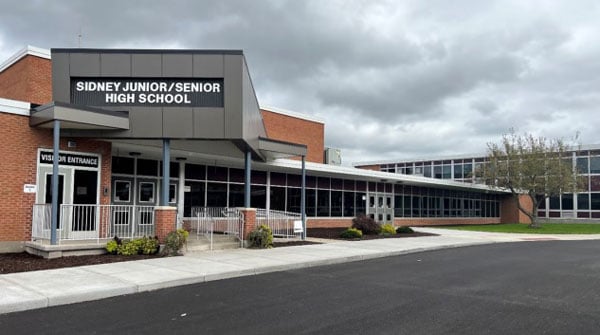
Sidney Junior/Senior High School
At a Glance
Location: Delaware County
Enrollment: K-12
Objective: Develop a strategy for saving money and decarbonizing Sidney Junior/Senior High School
NYSERDA Program: FlexTech
Our schools are brighter, warmer, and more efficient than ever before. These upgrades aren’t just about saving money—they’re about investing in our students’ future.
– Sidney CSD Representative
Energy Analysis: Monitor and Measure
The audit also analyzed utility accounts and consumption to establish the energy use baseline and verify associated costs. Architectural, electrical, and mechanical drawings, building conditions surveys, and site observations were used to assess each structure’s building envelope, lighting, and HVAC systems.
Recommendations and Savings Snapshot
The audit recommended energy efficiency upgrades and operational, maintenance, and process improvements that included:
- Upgrade from fluorescent to LED lighting: Estimated savings $36,000 – Includes remote and wireless controls with programming, and an optimum schedule time for day runtimes. Reduces energy usage by as much as 75% and requires less maintenance.
- Improve the building’s envelope. Estimated savings: $48,000 – Replace door sweeps, seal roof and wall gaps, and seal penetrations to stop air leaks. Envelope improvements would also make the building more comfortable and enable better temperature control.
- Boiler control enhancements. Estimated fuel oil savings: $24,000 – Includes advanced burner optimization and O2 trim combustion controls to improve combustion efficiency.
- Temperature control improvements. Estimated savings: $85,000 – Upgrade control systems with added sensors and variable air volume (VAV) systems. Optimize scheduling and air balancing. Reduce energy waste during unoccupied hours. Improve HVAC efficiency.
- Seal ductwork with Aeroseal technology. Estimated savings: $22,000 – Reduce air leakage and increase air distribution efficiency.
- Install heat pumps and variable refrigerant flow (VRF) systems. Estimated savings: $64,000 – Replaces fossil fuel-based HVAC systems and reduce oil dependence.
The systems run themselves. There is very little adjustment needed, and they operate flawlessly.
– Director of Facilities
Annual Energy Savings Identified: Approximately $280,000
If implemented, these measures represented significant financial savings that would lower the district’s carbon footprint and enhance indoor comfort across facilities. With the report and its detailed analytics, the district created an energy efficiency strategy, and prepared to implement projects.
Post-Study Action: Heat Pump Installation
Independent of the NYSERDA-supported study, SCSD opted on its own to install zoned, air source heat pumps for heating and cooling within the junior high school and elementary areas. The heat pumps included both ceiling cassettes and unit ventilator systems. The total cost for the heat pump upgrade was approximately $2 million.
Heat pump system benefits include:
- Operates entirely on electricity and eliminates fossil fuels.
- Remote scheduling and programming allow the district to monitor and manage temperature controls across all locations effectively, optimizing both comfort and cost management.
- A zoned system allows for custom temperature settings in each classroom or space, significantly improving the comfort in summer for more education programs and camps.
- The buildings now have air conditioning, and the district can run summer programs for the first time.
Lessons Learned
The temperature control in the classroom is great. The classroom heats up and cools down so timely. My students are not complaining about the temperature in the classroom anymore. Thank you!
– Middle School Teacher
According to district staff, several noteworthy lessons were identified. On the relationship side, collaboration with the service provider was very valuable. On the technical side, shut-off valves at each unit-ventilator enable units to be isolated and run independently.
A Model for Other Districts
Sidney CSD’s success story demonstrates how targeted energy investments can yield solid returns. With expert planning and execution, the district cut costs, is taking significant steps toward operational excellence, and has elevated the quality of its learning spaces now and into the future.
Ready to learn more?
If your school would like to participate, explore the FlexTech program or contact us at [email protected].