

Regional Greenhouse Gas Initiative
The Regional Greenhouse Gas Initiative (RGGI) is the first market-based regulatory program in the United States to reduce greenhouse gas emissions. RGGI is a cooperative effort among the states of Connecticut, Delaware, Maine, Maryland, Massachusetts, New Hampshire, New Jersey, New York, Rhode Island, Vermont, and Virginia to cap and reduce CO2 emissions from the power sector.
How it Works
The Regional Greenhouse Gas Initiative requires power generators to obtain allowances equivalent to their CO2 emissions and auctions those allowances to fund programs that aim to reduce emissions and pollution through energy efficiency, renewable energy, and carbon abatement technology. Each allowance represents one short ton of CO2 emissions.
In 2014, participating RGGI states set a cap of 165 million short tons of CO2 emissions. From 2015 to 2020, the RGGI CO2 cap declined by 2.5 percent each year before increasing to an annual decline of 3 percent from 2021 through 2027. Program changes enacted in 2026 will result in a steeper annual decline of about 10.5% from 2027 to 2033, followed by a 3% annual decline from 2034 to 2037.
RGGI Inc.  is responsible for administering quarterly auctions of the CO2 emissions allowances, which are held jointly for all participating states. The proceeds from the sales of these allowances are used by NYSERDA to administer energy efficiency, renewable energy, programs for disadvantaged communities, and carbon abatement programs, and to cover the costs to administer such programs. These investments reduce greenhouse gas emissions and provide consumer benefits, including lower energy bills, greater electric system reliability, and job creation.
Although each RGGI state has an individual CO2 Budget Trading Program, they are regionally linked through CO2 allowance reciprocity, meaning an allowance issued by any participating state will be recognized by the other participating states. Due to this reciprocity, the RGGI states comprise a single regional carbon allowance market.
Learn More About the Regional Greenhouse Gas Initiative
-
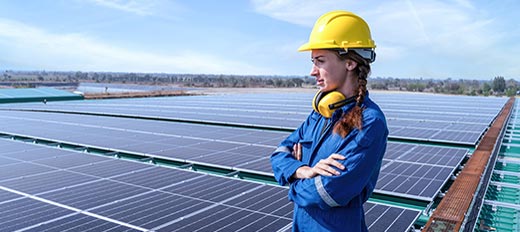
RGGI-Funded Programs
Read More RGGI-Funded ProgramsLearn about the programs funded through RGGI and their benefits.
-

Use of Auction Proceeds
Read More Use of Auction ProceedsReview the RGGI Operating Plan, which summarizes the use of auction proceeds, and information about stakeholder meetings and public comments.
-

RGGI Meeting and Planning Documents
Read More RGGI Meeting and Planning DocumentsView agendas, presentations, recordings, and other materials from RGGI meetings.
-

Notice of Auction
Read More Notice of AuctionAccess quarterly auction information and materials, including applications for participating.
RGGI Regulations and Resources
The Regional Greenhouse Gas Initiative (RGGI) program has been implemented through two complementary regulations:
- Carbon Dioxide (CO2) Budget Trading Program (6 NYCRR Part 242, 6 NYCRR Part 200, General Provisions), established by the New York State Department of Environmental Conservation (DEC).
- CO2 Allowance Auction Program (21 NYCRR Part 507), established by NYSERDA.
The use of RGGI auction proceeds is guided by the Climate Act  , which requires that at least 40%, with a goal of 45% of benefits are directed to Disadvantaged Communities.
Following the third comprehensive RGGI Program Review, New York along with the participating states announced a proposal to lower the regional emissions cap to approximately 70 million tons in 2027, declining about 10.5% annually through 2033 and about 3% annually from 2034 to 2037. The Program Review also included new provisions to contain costs. Accordingly, NYSERDA finalized revisions to the CO2 Allowance Auction Program as set forth in Part 507. These revisions complement changes that the Department of Environmental Conservation finalized to Part 242, which is the primary mechanism for regulation of CO2 emissions throughout the State. A copy of NYSERDA’s finalized updates to Part 507 as well as a Regulatory Impact Statement and Regulatory Flexibility Analysis for both Part 507 and Part 242 can be found below:
- Revisions to NYSERDA Part 507 [PDF] - Underlined wording found in the text of the express terms is material to be added to the regulations. Wording found within brackets [ ] is material to be deleted.
- Regulatory Impact Statement [PDF]
- Regulatory Flexibility Analysis [PDF]
- Job Impact Statement [PDF]
- Rural Area Flexibility Analysis [PDF]
- Summary of the Assessment of Public Comment [PDF]
- Assessment of Public Comment [PDF]
Connect With Us
Contact NYSERDA regarding the New York CO2 Allowance Auction Program at [email protected].
Sign up for the New York State's Regional Greenhouse Gas Initiative stakeholders email list.