

Policy and Science Advisor Update Q1 2026
Each quarter, NYSERDA’s Policy & Science Advisor newsletter reports on the status of the Authority’s environmental research portfolio. This issue includes program updates spanning ecosystem response, land-based renewables, offshore wind, climate change, and air quality and health.
Ecosystem Response
Adirondack Research Forum
The 23rd Annual Adirondack Research Forum was held on March 2-3, 2026 at the Adirondack League Club in Old Forge, New York. NYSERDA supported projects were presented on long-term trends in chemistry of Adirondack Lakes, soil carbon stock changes from land use conversion, and Adirondack Loon census. Much of the research presented was pilot studies and updates on the Survey of Climate Change in Adirondack Lake Ecosystems (SCALE) initiative, which received initial workshop funding from NYSERDA.
Adirondack Lakes Long Term Monitoring
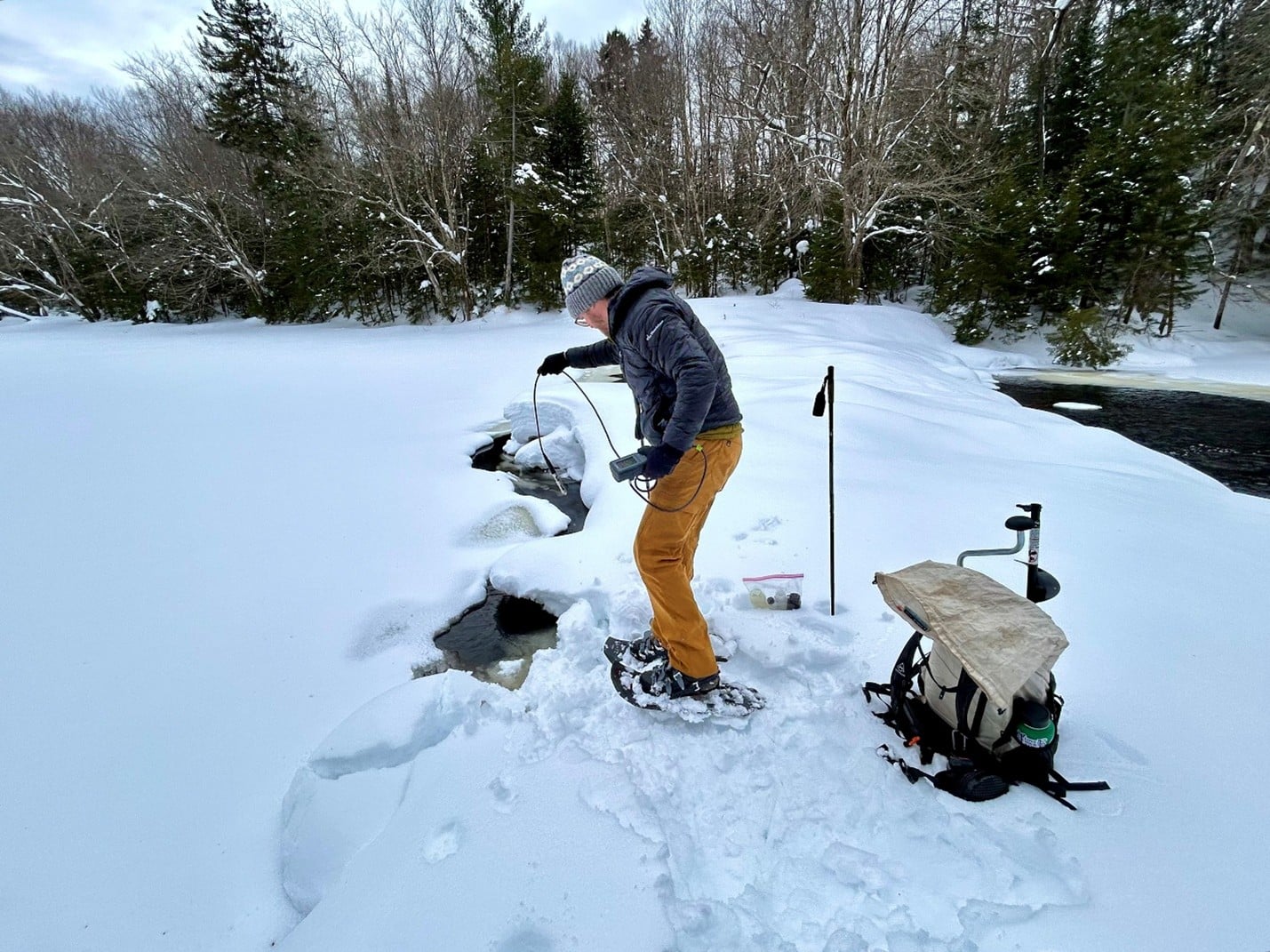
Paul Smith’s College Adirondack Watershed Institute (AWI) finished another season of lake sampling with a total of 97 samples for the Adirondack Long Term Monitoring Program. The sampling rate remains high with only a few sites being missed for reasons outside of AWI’s control such as low water levels from drought. AWI virtually hosted the third Adirondack Long Term Monitoring Science Advisory Committee meeting on March 9, 2026, to discuss the current status of lake monitoring and opportunities for coordination with other watershed monitoring.
Land Based Renewables
Measuring Soil Health and Carbon Storage on Solar Photovoltaic Developments
Cary Institute published their final report on solar photovoltaic developments [PDF]. This study explored the influence of solar arrays and microsite variation on soil properties across three nonresidential solar parks with distinct land-use histories and found that soils under panels, between rows, and in reference zones did not differ in total soil carbon or nitrogen. However, other differences were observed based on prior land use of the site showing the importance of site history and vegetation in shaping the effects of solar arrays on soil health.
Avian Use of Photovoltaic Solar Energy Facilities
DNV Energy USA Inc. (DNV) explored how breeding birds use ground-mounted photovoltaic solar facilities at sites in New York and western Massachusetts to understand how the transforming landscapes are impacting bird communities. Breeding bird communities were observed based on occupancy, abundance, species richness, vegetation structure, and nesting behavior in 2021 and 2022.
Overall, the study found that solar facilities can support diverse bird communities in the northeastern United States, but vegetation structure, site context, and management practices are critical for species-specific responses. Future solar siting and management decisions to enhance ecological benefits while minimizing negative impacts on sensitive bird species include:
- Minimizing mowing during breeding season
- Maintaining early-successional habitat to benefit many species
- Selecting seed mixes and vegetation to support diverse bird communities
- Ensuring the facility layout and scale support habitat suitability for area-sensitive species
- Using long-term monitoring to improve understanding of bird use in solar facilities.
Agricultural Technical Working Group (A-TWG)
The A-TWG met twice in Q1 2026 to: receive and discuss updates on agriculture relevant sections of the New York State Solar Guidebook, progress on the agrivoltaics research and demonstration projects, and Smart Solar Siting Scorecard results from submissions to Renewable Energy Siting – Request for Proposals ‘25 (for purchase of NY Tier 1 Eligible Renewable Energy Certificates). The group also provided initial questions and feedback to advise NYSERDA and the New York State Department of Agriculture and Markets on development of the Sun and Soil Program, as announced in the Governor’s 2026 State of the State address, to increase options for farmers and agricultural communities to benefit from the integration of solar energy development in ways that sustain agriculture. Meeting summaries and slide decks are posted on A-TWG’s website  . A-TWG's Agrivoltaics and Scorecard Specialist committees, respectively, each met once to provide input on relevant topics including upcoming solicitations and identify initial priorities for the committees to work on this year.
Offshore Wind
International Partnering Forum
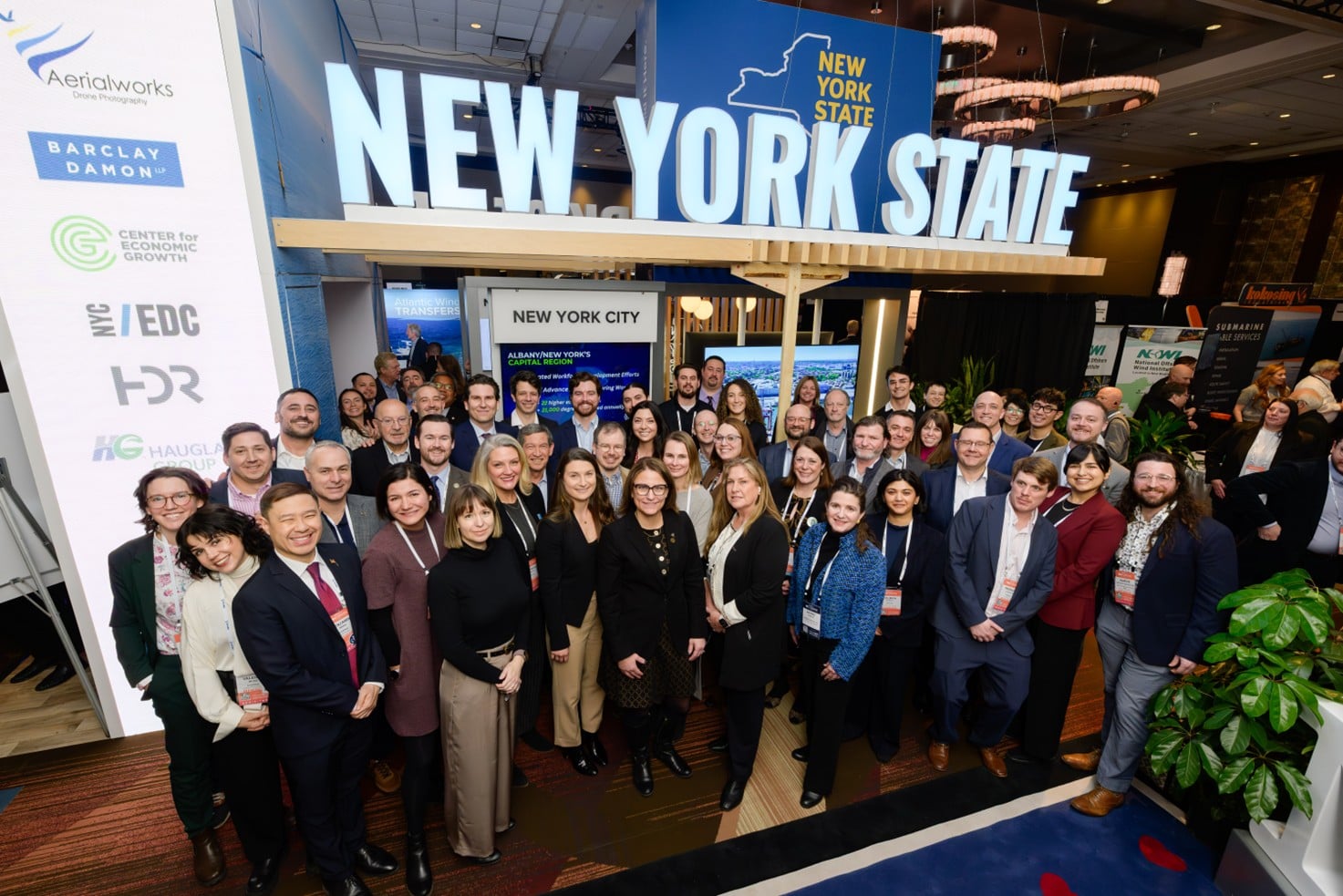
The 2026 International Partnering Forum : Energy at Sea was held in New York City from February 9 to 12. New York State hosted a pavilion, highlighting supply chain and economic development efforts across the State. The Plenary included remarks from NYSERDA President and CEO Doreen M. Harris and Senior Vice President for Large Scale Resources Georges Sassine. The event included several speakers from NYSERDA, including members of the Environmental Research Program who discussed the role of artificial intelligence in environmental research and permitting.
Recreational Fisheries Liaison
Captain Tony DiLernia, NYSERDA’s Recreational Fisheries Liaison, staffed a booth at the NY Boat Show on January 21-25, the Atlantic City Boat Show on February 25-March 1, and the New England Saltwater Fishing Show on March 6-8. Hundreds of individuals stopped by the booth at each event to have their questions answered and concerns heard about the development of offshore wind across the region. Most questions focused on Empire Wind and the recreational fishing activity in the area. Other questions focused on turbine and scour coordinates and project completion dates. Most people expressed hope that construction will continue for the offshore wind projects.
Regional Fisheries Compensation Fund
The multi-state effort to advance a regional fisheries compensation fund continues to make progress continues to engage with stakeholders to develop a draft design framework by late summer 2026. An early March presentation to the Maine Fishermen’s Forum describes the concepts in development, a project timeline, and upcoming focus areas. View the presentation and meeting summaries for the recent for-hire committee (FHC) and design oversight committee (DOC) meetings on the RFA website .
Environmental Technical Working Group (E-TWG)
The E-TWG held a virtual meeting on March 3 to discuss resources for communicating about wildlife and offshore wind development. Materials from the meeting are available on the E-TWG website .
Birds and Offshore Wind
The E-TWG, with support from technical experts, published answers to frequently asked questions (FAQs) about birds and offshore wind development. The FAQs include information on how birds in the U.S. Atlantic may encounter offshore wind, the potential impacts of offshore wind on birds, how the risk of collision is determined, and how risks to birds are mitigated through federal regulations.
Climate Change
Research Solicitation
The most recent solicitation for climate research received a very robust proposal response. Proposals were submitted in four topics: gaps in heat vulnerability data, climate and indoor air quality, compound events, and climate projections. NYSERDA recently entered into contract with the following awardees:
- Improving Heat-Impacted Population Data – Alec Bernstein, ICF
- Using Advanced Analytics and New Weather Reanalysis to Study Compound Events and Impacts Across New York State – Mason Fried, ICF
- Climate-Informed Impact Assessment and Tool Development for Compound Events in New York State – Owen Doherty, Eagle Rock Analytics
- Use of Automated Rain-Gauge and Radar Products to Investigate Sub-Daily Intense Rainfall in NYS – Bernice Rosenzweig, Sarah Lawrence College
- Projecting Weather Extremes – Mingfang Ting, Columbia University
- Orientation-Driven Compound Flooding in New York: Quantifying Surge-Rainfall Interactions for Tropical Cyclone Landfalls – Benjamin Felzer, Lehigh University
- Climate Change and Indoor Air Quality Scoping – Drew Gentner, Yale University
Air Quality and Health
American Meteorological Society conference
Yuwei Zhao, a Ph.D. candidate in Roisin Commane’s group at Columbia University presented Quantifying Greenhouse Gas Emissions and Sources in New York City Using New Laboratory Results, at the American Meteorological Society conference held in Houston, Texas in January 2026.
Program Reports and Papers
Air Quality and Related Health Research: Particulate Matter (PM), Ozone and Co-Pollutants
VOC Sources in the New York City Metro Area
Identifies local and regional contributors to volatile organic compound levels across the NYC metro area. Borlaza-Lacoste et al., 2026
Methane Emissions at New York State Landfills
Compares aerial and ground-level mobile monitoring methods for measuring methane emission rates at NYS landfills. Catena et al., 2026
NYC Coastal Ozone Formation and Control
Uses new TEMPO satellite observations to explain how high-ozone events form downwind of NYC's coast. Zhang et al., 2026
Volatile Organic Compounds Over Staten Island
Presents a conceptual model of ambient VOC behavior specific to the Staten Island area. Turner et al., 2026
Land-Based Renewables
Soil Health and Carbon Storage on Solar Sites
Final report measuring how NYS solar photovoltaic developments affect soil health and carbon storage. NYSERDA, 2025 (Report No. 25-27)
Bird Communities at Solar Energy Facilities
Final report on avian use and bird community composition at PV solar facilities in New York and western Massachusetts. NYSERDA, 2026 (Report No. 26-02)
Regional Agronomic Impacts of Solar Energy (RAISE)
Phase 1 findings on how solar energy development affects regional agronomic conditions. NYSERDA, 2026 (Report No. 26-01)