We use first- and third-party cookies and similar technologies for enhancing your experience, personalization, analytics, advertising, and improving our site. By using this website, you consent to our use of cookies. You can learn more about how we collect and use information by reviewing our Internet Privacy Policy.
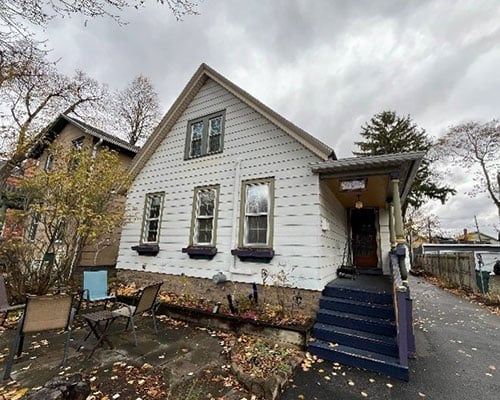
This 156-year-old home in Rochester had heat pumps installed in 2025, because the old oil furnace struggled to heat the entire home evenly and left the homeowner with high heating bills.
The exterior front of the house on a cloudy fall day.
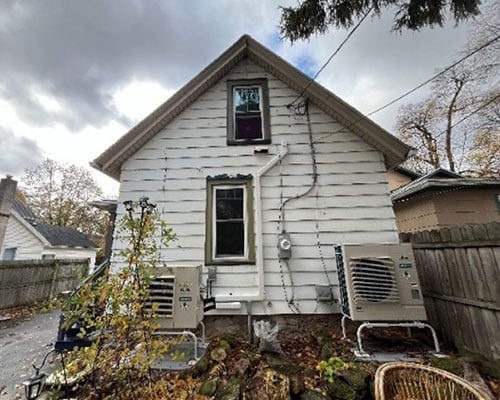
The exterior rear of the house, showing the two heat pump outdoor units.
Study Objective
Due to the increasing prevalence of cold-climate heat pumps in homes across New York State, NYSERDA commissioned a study of some of these homes to see how well heat pumps maintained indoor temperatures during real-world extreme cold conditions, and what the homeowners who had these systems installed had to say about their experiences.
Over the 2025 – 2026 heating season, this study measured temperatures inside single-family homes that heat with whole-home air source heat pumps to investigate the systems’ performance when outdoor temperatures were at or below design temperatures. This case study details the results from one of those homes that participated in the study.
Project Overview
House Size: 1,741 square feet
Year Built: 1870 (weatherized in 2025)
Number of Stories: 2
Heat Pump Installed: January 28, 2025
Design Temperature: 3°F
Design Heating Load: 46,526 Btu/h (26.8 Btu/SF)
Heat Pump Capacity at Design Temperature: 53,300 Btu/h
Maximum Power Draw (kW): 4.21 (ducted) 3.49 (ductless)
System Design
Previous System Challenges
Near end of lifespan; slow to bring the home up to temperature.
No ductwork on the second floor
No attic above the conditioned space where ductwork could be installed.
This configuration made indoor temperatures uncomfortably cold and uneven during the winter months.
Heat Pump Design
Following a detailed load calculation, the heat pumps were designed to meet a heating load of 46,526 Btu/h at a design temperature of 3°F, ensuring reliable performance during Rochester’s extreme winters.
Contractor Design Solutions
Reused the furnace’s ductwork, in combination with a heat pump, to condition the first floor
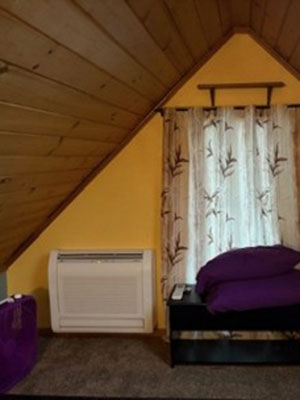
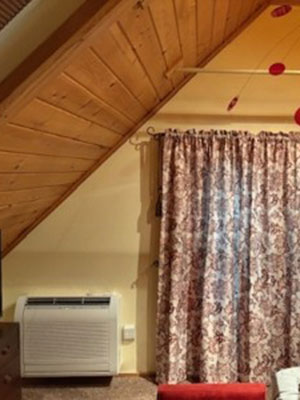
Two low-wall mounted ductless heads connected to a separate outdoor unit for ductless second floor.
This approach avoided the need to install new ductwork and made good use of the limited wall space and pitched ceilings.
One of the indoor ductless units, mounted low on a wall in an upstairs bedroom.
The other indoor ductless unit, mounted low on a wall in a different upstairs bedroom.
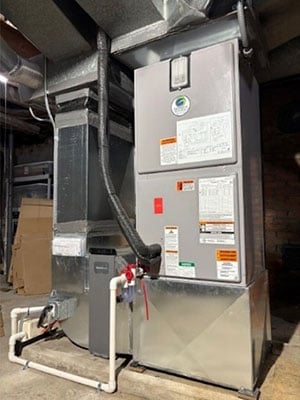
The air handler in the basement, showing duct modifications to connect to the legacy ductwork.
Temperature Maintenance
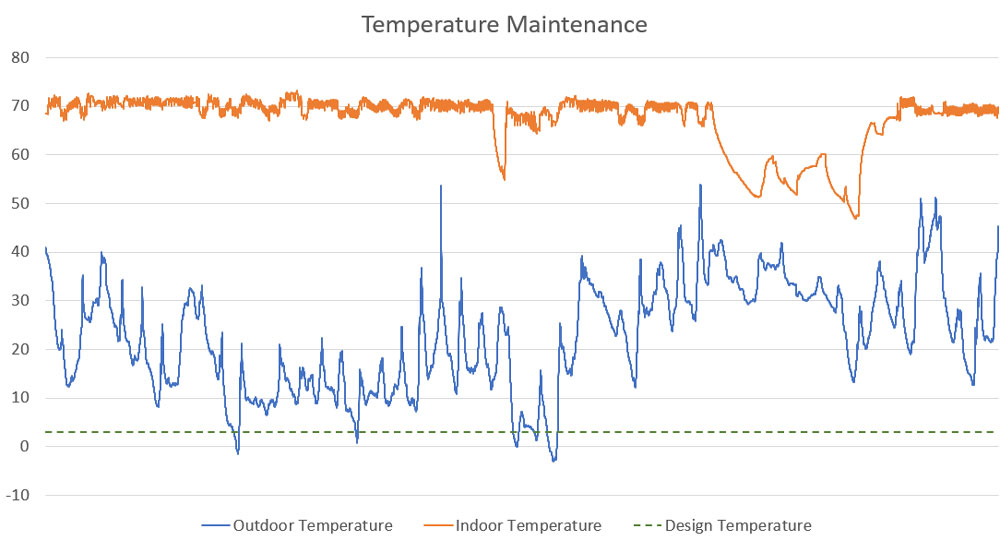
During Rochester’s coldest winter in 11 years, the heat pumps delivered reliable heating through multiple cold snap events, even with temperatures reaching well below the 3ºF design temperature. Indoor temperatures remained consistent through long stretches of cold weather.
While there were a few dips in indoor temperature, they were not related to outdoor temperatures:
Thermostat error: Contractor was able to clear the error and get the system running during the callback.
Circuit board failure on the downstairs heat pump: The indoor temperature dropped, but the home remained habitable and undamaged because the upstairs heat pump and a small portable plug-in heater were able to provide heating to the whole home.
A graph showing the indoor, outdoor, and design temperatures.
The indoor temperature remains steady around 70ºF throughout the study period except for two dips. The outdoor temperature varies widely day-to-day and drops below the design temperature several times.
Energy Use and Cost
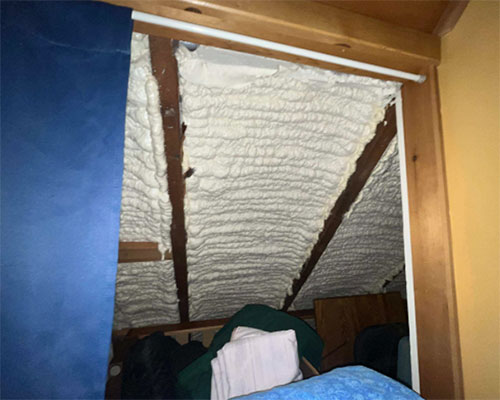
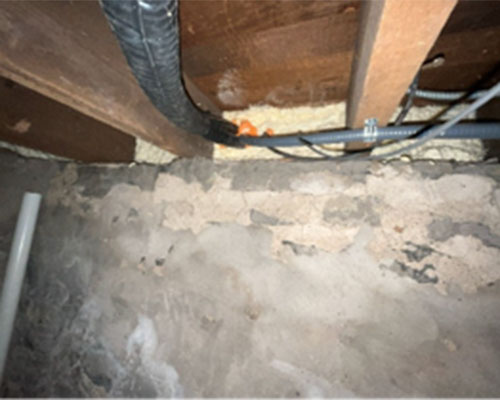
The oil furnace was removed prior to the installation of the heat pump. At the same time, the homeowner had the rim joists and underside of the roof insulated with spray foam to help stabilize home temperature and reduce heating load.
In the first heating season that the heat pumps were installed and operating, the homeowner’s total energy costs decreased by $1,096 compared to the previous heating season using fuel oil.
Energy costs were higher in the 2025/2026 heating season than the 2023/2024 baseline due to a combination of colder weather, higher electric rates, and a circuit board issue with the downstairs heat pump that resulted in higher usage from the upstairs unit and a plug-in space heater.
Even with this higher electricity cost in the 2025/2026 season, the homeowner would have spent an estimated $1,043 more if they still used fuel oil due to increases in fuel prices.
In addition to the savings during the heating season, the house used between 33% and 54% less electricity during each of the 2025 summer months, compared to the prior year when window AC units were being used.
Heating season energy usage comparison.
Heating Season (Oct - Apr)
Electric Use (kWh)
Avg. Cost per kWh
Electricity Cost
Fuel Oil Use (Gallons)
Avg. Fuel Oil Price per Gallon
Fuel Oil Cost
Total Costs
2023/2024
6,685
$0.17
$1,136
545
$3.68
$2,003
$3,140
2024/2025
9,574
$0.18
$1,723
94
$3.40
$320
$2,044
2025/2026
14,992
$0.21
$3,148
0
N/A
$0
$3,148
Cold Snap Events
Cold Snap 1: Dec. 7 - 9, 2025
Lowest reported temperature:
4°F
“My house has been exceedingly comfortable; I actually keep thinking that I’m going to turn my heat even further down. I have it set on 67 and it feels in my house the way my house used to feel with my old system… when I had it set on 69.”
Cold Snap 2: Jan. 24 - Feb. 2, 2026
Lowest reported temperature:
-6°F
“...I did not even realize we had a cold snap. I mean, obviously I knew we had a cold snap because I have eyes, but the inside of my house did not reflect the fact that there was a cold snap happening outside.”
Cold Snap 3: Feb. 7 - 9, 2026
Lowest reported temperature:
-9°F
“I think this one weekend was kind of an exception in terms of how cold it actually got, and so then the system wasn’t able to keep up as well. To be fair, my house was still 66. It’s not like I was without heat, right? I still had some heat. It just wasn’t as warm as I wanted it to be.”
Customer Experiences
This homeowner listed several reasons for wanting to get heat pumps. Here is how the new system measured up in their own words:
Improve Home Comfort With Better Heating
“It runs a lot, but it’s not blowing a whole bunch of hot air at once. It just sort of keeps everything very evenly heated. Again, there’s not the fluctuation. I have not been concerned at all about getting enough heat when it’s extra cold outside. It seems to be perfectly capable of keeping the house at temperature.”
Save Money
“After looking at my kilowatt-hours used, it feels like it’s reasonable. […] As I’m sure you’re aware, the cost of electricity has skyrocketed, but that has nothing to do with the heat pump and its performance. That has to do with a lot of other outside factors.”
Reduce Carbon Footprint
“I believe in the technology. I think that it’s better for our environment, and I think that even though we’re in a cold climate, the technology is advancing fast enough that cold climate heat pumps are actually effective.”
Survey Results
Prior to the heating season, this participant rated the comfort, noise, and utility bills of their heat pump higher than their former fuel oil furnace, and they reaffirmed the heat pumps met their expectations in the postseason survey, even after the challenges with the equipment experienced during the third cold snap event.
5 out of 5 stars
Comfort rating for Cold Snaps 1 & 2
4 out of 5 stars
Comfort rating for Cold Snap 3
4 out of 5 stars
Confidence in ability of system to meet heating needs
Callbacks
This home was one of only two in the study to receive callbacks during the monitoring period. Starting in early February 2026, the homeowner experienced communication issues between the ducted system’s air handler and the outdoor unit. The contractor was able to clear the error code and get the heat pump running again within the day.
At the end of February, the system displayed a new error code that could not be resolved immediately. The contractor worked with Fujitsu to solve the new issue. While the first-floor heat pump was not running, the combination of the improved insulation, remaining heat pump, and a plug-in space heater kept the pipes from freezing. Ultimately, a circuit board and then the entire outdoor unit were replaced under warranty to get the downstairs heat pump running again.
The underside of the roof deck, showing the spray foam insulation.
The interior basement wall, showing spray foam insulation applied to the rim joist.
Key Takeaways and Lessons Learned
The heat pumps kept the house at the setpoint with no changes in the homeowner’s behavior when outdoor temperatures approached (and dropped below) design conditions during the first two cold snap events. The only decrease in indoor temperature related to the weather happened during the last event, when outdoor temperatures dropped 12ºF below design temperature. With the thermostat set to 67ºF degrees, the heat pumps maintained an indoor temperature between 64ºF and 68ºF, with the homeowner reporting an indoor temperature of 66ºF.
The homeowner saved over $1000 in total energy costs in the first year after weatherization and heat pump installation by reducing their oil use. The homeowner had the house air sealed and insulated as part of the heat pump installation. This step reduced the upfront costs of the heat pump equipment and the long-term costs of operating the system, all while improving comfort.
Having a heat pump system with multiple outdoor units and a better insulated house provided added resilience to keep the home a habitable temperature while waiting on a replacement part for one of the systems.