

1876 Summit Knitting Mill Adaptation
Capital District

View Project Info View Project Info
1876 Summit Knitting Mill Adaptation
27 Summit Street, Philmont, NY
34,550 Total sq ft.
- A Squared Building
- Adaptive Reuse
- BCCC Award: $1,309,250
Measures
- Air Source Heat Pump
- High Performance Envelope
- Solar Photovoltaic System
- Backup Generator
- Downtown Revitalization Initiative Location
Award: $1,309,250
Company: A Squared Buildings (opens in new window)
REDC: Capital District
Project Description
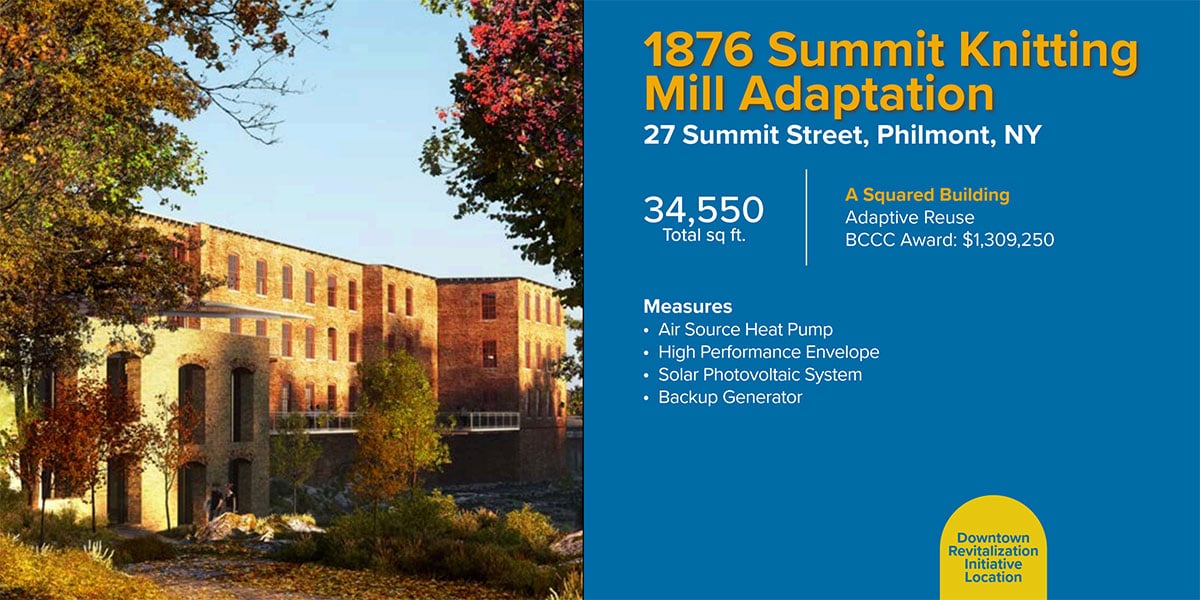
The Philmont Mill project comprises the complete restoration and renovation of the Summit Knitting Mill building, a 34,550 square foot structure originally built in 1878, into a venue for private events, exhibitions, and performing arts. The adaptive reuse design features 8,500 square feet of dedicated event space including a multifunctional space and theater, a stone grotto, a mezzanine balcony, and outdoor areas with views of the Agawamuck Creek. Amenities include green rooms, a 600 square foot commercial kitchen, and indoor and outdoor gathering areas. The third floor will be leased to LOOM (opens in new window), a non-profit arts organization that will establish residencies, exhibition spaces, and public programming. Situated at the edge of Summit Lake, overlooking a stone dam and forested ravine, the project will preserve the mill's architectural heritage, including its distinctive four-story tower, while implementing sustainable improvements. The all-electric project will include a rooftop photovoltaic system, high efficiency heating and cooling utilizing a variable refrigerant flow system, building envelope improvements including window and facade repairs/replacements, LED exterior/interior lighting, and light/environmental control strategies to optimize operations.
The Building Cleaner Communities Competition
The Building Cleaner Communities Competition supports regionally significant, zero emissions and resilient new construction and existing building renovation projects across New York State. Building Cleaner Communities projects demonstrate how they will help achieve the goals of the New York State Regional Economic Development Council’s Strategic Plan (opens in new window) or other State priorities, while creating resilient and functional spaces that are healthy, safe, comfortable.