

Domestic Hot Water Electrification Strategies
Electrifying your domestic hot water (DHW) system is a straightforward and cost-effective building decarbonization strategy. Electric DHW equipment is widely available, relatively inexpensive, and commonly used, plus, these systems are generally easy to install and replace, smoothing the transition from natural gas to electricity.
How to Evaluate DHW Systems
Prior to electrifying your DHW, evaluate existing fixtures and hot water demand to minimize the hot water load and ensure the building is operating efficiently. Although electricity typically has a higher cost per British thermal unit (Btu) than natural gas, careful system sizing and proper insulation of the equipment and the building envelope can help manage utility costs.
Implement Water Conservation Strategies
Target performance improvements in buildings with significant DHW demands, such as residence halls, gymnasiums, and kitchens. Evaluate the potential to reduce water use in these buildings at hot water fixtures (such as sinks/faucets and showers) by upgrading all fixtures to low-flow options, which can be performed during the building’s renovation cycle or at end-of-life. Reducing the overall potable hot-water demand reduces the energy required to heat that water.
Evaluate Existing Domestic Hot Water Infrastructure
Evaluate the conditions and interconnectivity of the existing DHW system, from the water supply to the heating equipment to the end-use fixtures. This can include:
- Confirming that all pipes and tanks are well-insulated, particularly in cold climates
- Ensuring there are no leaks in the system
- Evaluating the domestic hot water heater to determine the current efficiency and whether maintenance could be improved
Compare Electric DHW Systems
There are several electric domestic hot water systems on the market:
Heat pump water heaters (HPWHs) offer high efficiency but are less suited for instantaneous heating due to lower temperature lift. They use electricity to transfer heat from the air or ground to heat water rather than converting electricity directly to heat. This reduces energy consumption by up to 60% compared to an electric resistance water heater. Pairing HPWHs with solar thermal systems can further reduce energy use by harnessing renewable energy to preheat water, thus lowering the demand on the heat pump system.
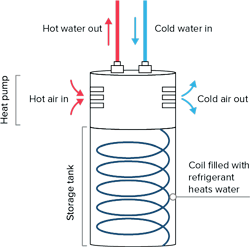
Heat Pump Water Heaters
This graphic depicts a heat pump water heater with a fan and air heat exchange on the left, with exhaust and intake air indicated by red and blue arrows. Inside the tank is a coiled heat exchanger connected to water piping, with cold water entering and heated water exiting at the top.
Electric resistance water heaters work by converting electricity directly into heat and, while less efficient than HPWHs, still offer a relatively low-cost, low-maintenance solution, especially in colder climates.
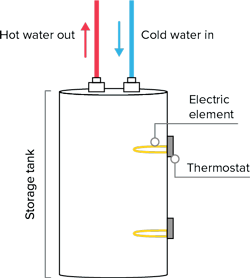
Electric Resistance Water Heaters
This diagram illustrates the components and operation of an electric resistance water heater. It shows a storage tank where cold water enters, is heated by internal electric elements controlled by a thermostat, and exits as hot water.
Hybrid water heaters combine heat pump and electric resistance technologies in a single unit. They provide efficient operation with built-in backup during periods of extreme cold or high demand, making them ideal for space-constrained, high-occupancy settings like residence halls. Operating these systems during off-peak hours can further reduce energy costs.
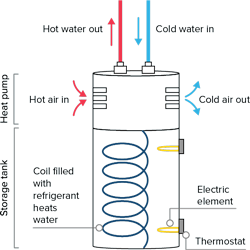
Hybrid Water Heater
This diagram illustrates a hybrid heat pump water heater, which combines a heat pump with traditional electric resistance heating. It shows how the system pulls in hot air to heat a refrigerant coil inside the storage tank while maintaining electric elements and a thermostat for periods of high demand.
Tankless systems eliminate standby losses and are well-suited for applications with intermittent or peak demand that require quick hot water delivery, such as residence halls.
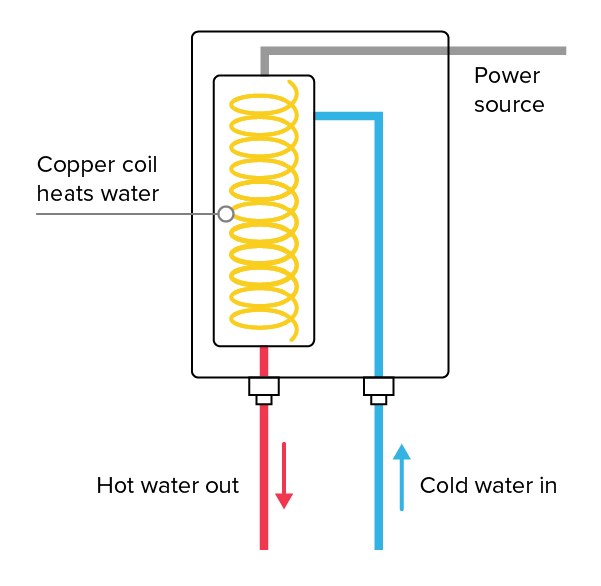
Tankless Water Heater
A schematic showing a tankless water heater with a vertical heating coil, cold water entering from the bottom (blue upward arrow), hot water exiting downward (red arrow), and inlet/outlet connections to domestic water piping at the top.
Explore Waste Heat Harvesting Opportunities
Consider recovering and using waste heat from existing campus processes (e.g., heat rejected from cooling systems, kitchen facilities, data centers, and sewage systems) to generate hot water. This heat recovery could be achieved through heat exchangers that use waste heat to support domestic hot water production.
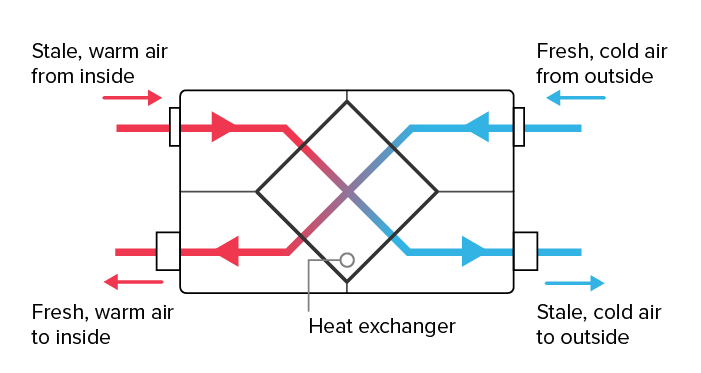
Heat Exchanger
This diagram illustrates a heat exchanger used for ventilation, showing the simultaneous transfer of thermal energy between two airflows. It demonstrates how stale, warm air from inside pre-warms fresh, cold air from outside to maintain indoor temperatures while providing ventilation.
Integrate With Renewable Energy Systems
Consider integrating domestic hot water with available renewable energy systems. Solar thermal collectors or other renewable energy systems can provide hot water for domestic use or power electric equipment such as heat pump water heaters.
Planning and Next Steps
Electrifying DHW systems is an essential step toward decarbonization. By transitioning to heat pump water heaters, electric resistance or tankless water heaters, and higher-efficiency kitchens, campuses can significantly reduce their carbon footprint.
To maximize success beyond electrification, campuses should explore integration with other systems such as energy storage, renewable energy, and waste heat recovery. The future planning and phasing for improving those systems will determine whether integration with the DHW system is an option. An integrated approach can help reduce the potential utility cost increases associated with electrification and help to share and balance demand between different types of thermal and electrical loads.
Consider if a retrofit should take place campus-wide, at individual buildings in a phased approach, or for specific use categories. For example, renovations for restrooms and shower rooms can commonly include separate upgrades in a standalone pathway from other campus improvements, which also supports the consolidation of multiple orders for bathroom equipment.
Resources

Connect With Us
Discover how to achieve large energy and carbon reductions across your campus.
Get In Touch